guide
Beach flags for swimmers: UK signs and meanings
Recognise red and yellow, chequered and red flags, the orange windsock and beach signs, with a quick reference and practical questions.
Beach flags are instructions to act on at the shore. Start with the beach's own signs and speak to the lifeguards; do not choose an area by how inviting the water looks. This reference explains the RNLI flag system.
Four signals to recognise
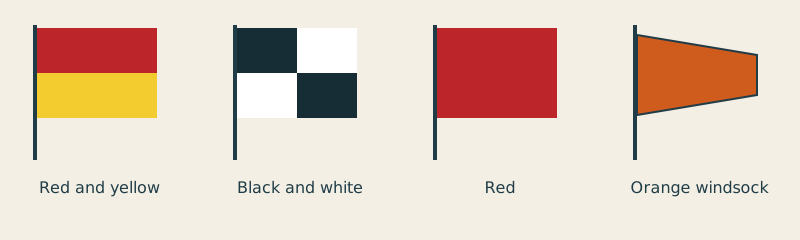
| Signal | What it tells a swimmer |
|---|---|
| Red over yellow | Marks the lifeguard-patrolled swimming and bodyboarding zone. Swim between the flags during patrol. |
| Black and white chequered | A watercraft area or boundary. Do not swim or bodyboard there. |
| Red | Dangerous conditions. Do not enter the water. |
| Orange windsock | Offshore or strong wind conditions. Do not use inflatables on the water. |
Signs matter alongside flags. A yellow triangle warns of a hazard; a red-and-white prohibition sign forbids the depicted activity. A lifeguard off-duty sign means there is no current lifeguard service. If you cannot understand the symbol or find the swimming zone, ask before entering.
On arrival
Use the RNLI lifeguarded-beach finder when planning, then check service details for the beach and date. Lifeguard cover is not a promise of year-round patrol. Across England, Scotland, Wales and Northern Ireland, check the individual beach's arrangements rather than assuming one national timetable.
The RNLI beach-safety guidance recommends lifeguarded beaches and swimming between the red-and-yellow flags. Keep looking for the actual boundaries, rather than using a landmark or photograph from a previous visit. You can decide to stay on shore even when a swimming area is marked.
Questions at the water's edge
These are reasons to pause and clarify the plan before changing or entering.
There are no flags. Does that mean I can swim anywhere?
No. Missing flags do not establish lifeguard cover or permission. Check the beach information and current signs. If you were relying on a supervised swimming area and cannot confirm it, change the plan.
Why is there a red flag when the sea looks calm?
Follow the flag. Appearance is not a reason to disregard the warning or test the conditions. Ask the lifeguards about the hazard from the shore.
Do the flags replace a water-quality check?
No. A marked swimming zone does not provide a bathing-water classification or a current pollution assessment. Our four-nation water-quality explainer helps you find the relevant authority. Read current local notices too.
What else should I check?
Use the before-you-swim checklist for the broader plan, including exits, companions and a way to call for help. Read tides and wind separately; flag recognition cannot replace understanding the location. In a coastal emergency call 999 or 112 and ask for the Coastguard.